Going North, Day One.
Last Thursday, at 11:07 pm, as I sat in my hotel bathroom with my head cloudy and the room gently spinning and shaking, I thought to myself:
a couple decades ago I would have paid good money for this experience.
but alas, I was not on any mind-altering drugs–and that was actually the problem. We had been driving all day, I had forgotten to take my meds for neuropathic pain, and as a result my legs and back were burning and my proprioception–knowing where my body and limbs are in space–was a bit off. Hence the spinning and shaking.
Neuropathic pain is typical of spinal cord injuries. Instead of being a response to a painful stimulus (nociceptive pain), it arises from the misfirings of damaged nerves. And I have a heck of a lot of those, so I also have a heck of a lot of neuropathy.
But I'm burying the lede here, because this weekend was our first attempt at a family vacation post-injury. Our goals were to travel by car, stay in a hotel, do touristy stuff, visit friends, and do all of this in a familiar place so that we remove as many unknown variables as possible. So after looking at Yosemite (too busy & not enough accessible activities), Las Vegas (we wanted to go toMeow Wolf's Omega Mart, but we couldn't find much else compelling for the family), and Disneyland (easy and accessible, but the transfers to my favorite rides are still beyond my skill level), we decided to go to Portland, which has emerged as the one place everyone can agree on.
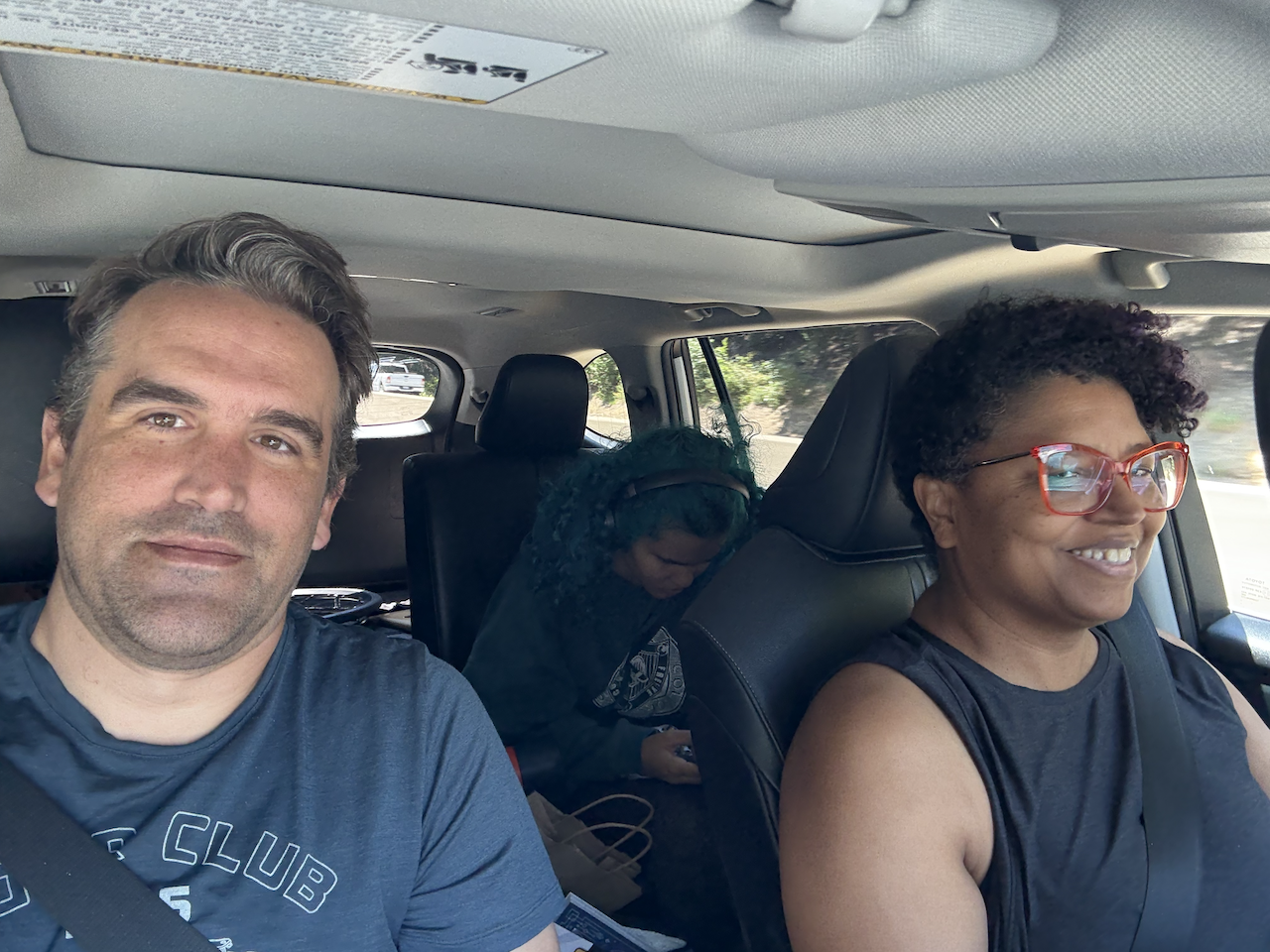
Over the next few days, Dacia and I will be documenting the trip–both from her perspective as caregiver and mine as... caregivee? So let's start with some observations from Day One:
- Every impairment is unique. We've both said this many times before but it bears repeating here. Before leaving we watched a ton of videos on how to pack, what to bring, what to expect, how to transfer, etc. Most of these videos were for people with higher (tetraplegic) injuries–people who require serious infrastructure to travel. So we basically winged it, just bringing the things I use at home and hoping we didn't encounter strange and exceptional conditions.
- The Ortovox Tour Rider 30L backpack is the perfect size for my "medical" bag. This was my backcountry ski backpack. I'm not gonna be doing much of that in the foreseeable future, so it's now crammed with the gear and meds I need to stay functional.
- A nine-hour drive is totally doable, with caveats. The big worry with long road trips is pressure sores. I've got to be shifting my position or lifting off the seat relatively frequently throughout the drive in order to prevent this. I found I could lean from side to side, I could assume the airplane crash position (head between my legs), or I could grab onto the overhead Oh-Shit handle and do a modified pull-up to relieve the pressure.
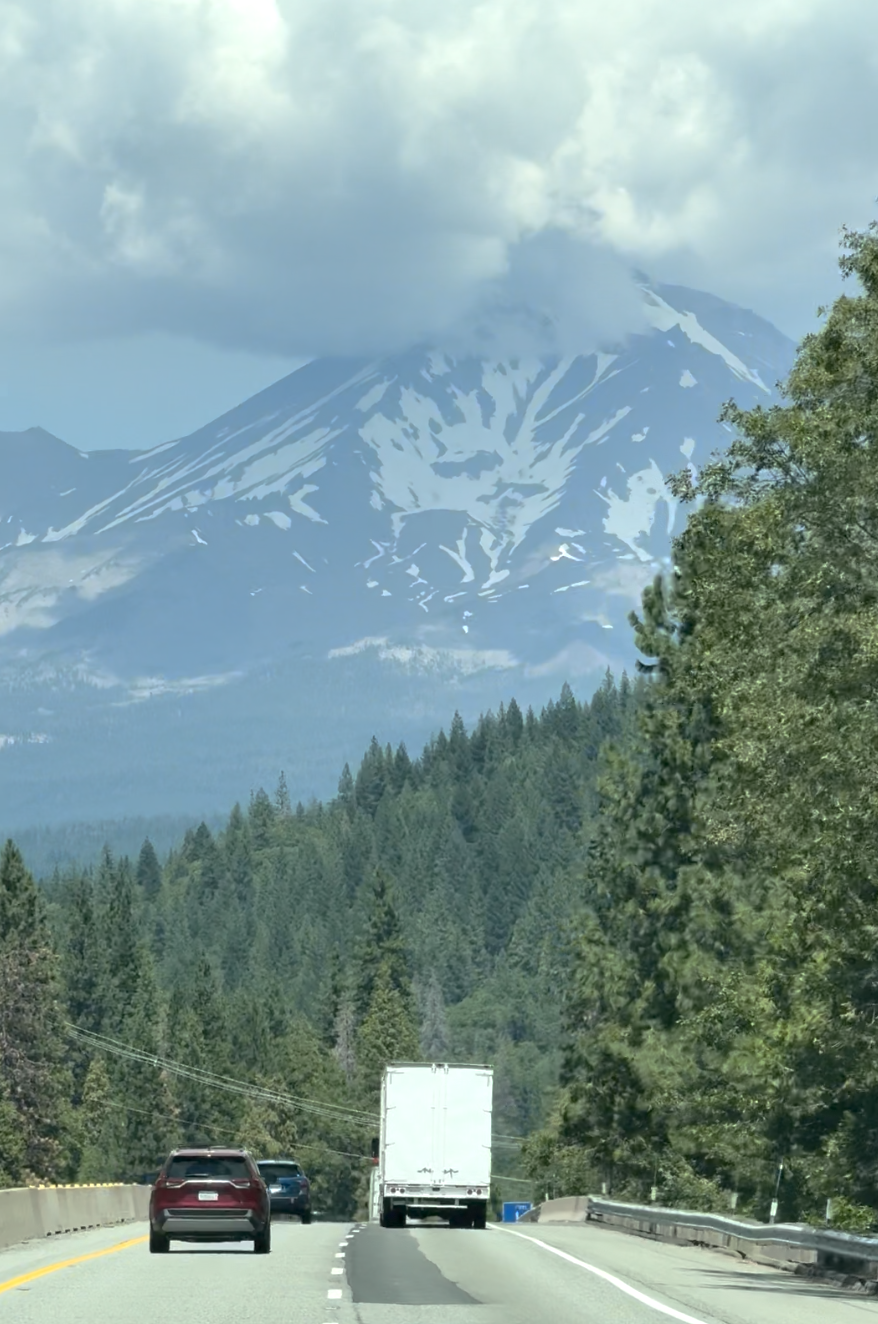
- Mount Shasta is always impressive. It's also a great place to stop on the way to Portland, so we stopped to stretch our legs and grab a burger. The kids' burgers came with gummy bears and were skewered with a lollipop, which we thought was a nice touch.
- Small towns have a looser approach to ADA standards. In Mount Shasta, we encountered a crosswalk that dead-ended in a six-inch curb, another one that consisted of chunks of asphalt loosely arranged around multiple bottomless sinkholes, and multiple areas made impassable by through-hiker gear roughly strewn about the place.
- When planning a trip, little things matter. Our hotel was on the left side of a one-way street, so I had to transfer to the car from the driving lane, rather than the curb. This made both of us extremely anxious–an emotion you don't want to be experiencing while trying to do a complicated transfer.
- Check your room before you move your stuff. The hotel initially placed us in an "ambulatory" accessible room, or one designed with someone who can stand and walk short distances. This meant a tub instead of a roll-in shower, a 15" high toilet, and paradoxically, 24" high beds. All of this would be manageable but not ideal, leading to my next point,
- complain when you need to, and stand on your rights. We went downstairs to request they accommodate us with a more accessible room and the front desk clerk Brooklyn went far above and beyond to make it right. Since there were no double queen rooms with a roll-in shower, she comped us a second (single king) room so that I could use the shower and toilet more easily. Which the kids of course loved, because they now had their own room. And it was pretty great for us as well. So thank you to the team at the Kimpton Vintage Downtown Portland. They really helped us out throughout the whole trip, as you'll see in future posts.
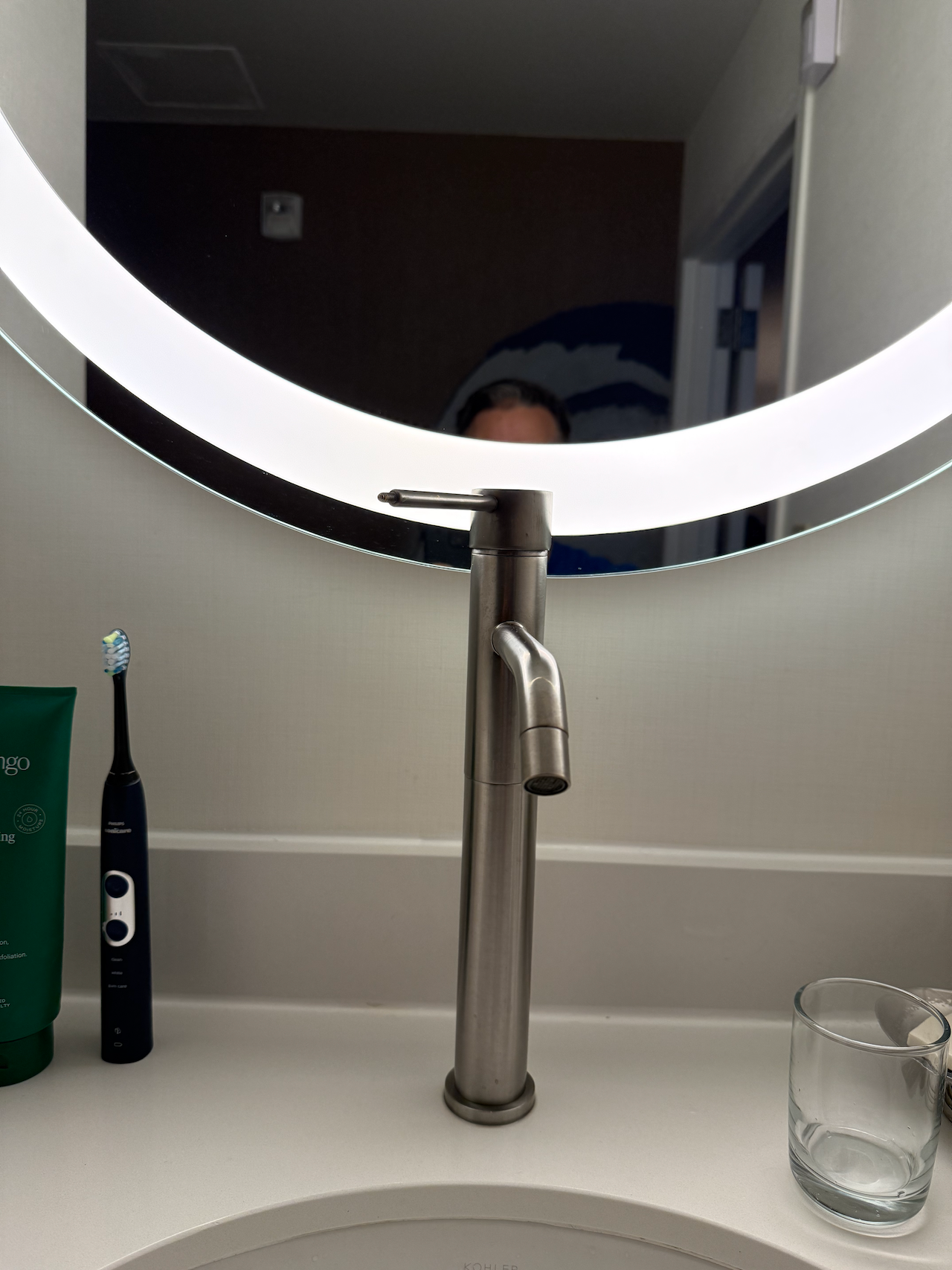
- ADA Standards are great, but they're just the beginning of what makes a space accessible. I loved being able to roll up to the sink and actually spit my toothpaste into the basin (rather than into a cup, as I have been doing since January), but the mirror placement was... sub-optimal.
- Finally, practice everything you can before the trip. Because of our house's layout it's simply not possible to transfer to any of our toilets. So Thursday night, while my legs were burning and spinning, was the first time I ever transferred to a toilet. And while I had practiced transferring to the shower bench at rehab last week, I was coming to the toilet as a complete neophyte. But I remembered my training, extended my right hand out to the grab bar on the side wall, placed my left hand next to my hip on my wheelchair cushion, slouched my shoulders, leaned my head out over my trailing (left) leg, and pushed off, making it over to the toilet in one move.
And that brings us full circle. I think every blog post should start and end on the toilet, and this one is no exception. Tomorrow I'll talk about what happened when I got off that toilet, started exploring Portland's least-accessible thrift shops, and ate the best Korean fried chicken I've ever had.